How we handle fake and incentivised reviews
Why review manipulation exists in local trades, the signals that reduce a review's weight, and what to do about a competitor gaming reviews.
Last updated: 11 August 2026
Why manipulation happens here
Local trades are unusually exposed to review manipulation, for a boring structural reason: the purchase is urgent, infrequent, and hard to evaluate.
Somebody locked out of their flat at midnight is not comparing six locksmiths on technical merit. They are picking whichever name looks trustworthy in the next ninety seconds, and a review count is the fastest trust signal available. That makes a fabricated review count worth real money, and a market forms accordingly.
Since every score on our independent Singapore service directories is built from public reviews, as described in how we rank businesses, this is our problem too. Here is what we actually do about it, and what we cannot.
Signals that reduce a review’s weight
We do not delete reviews. They live on the platforms where they were posted, and only those platforms can remove them. What we control is how much a review counts toward a score.
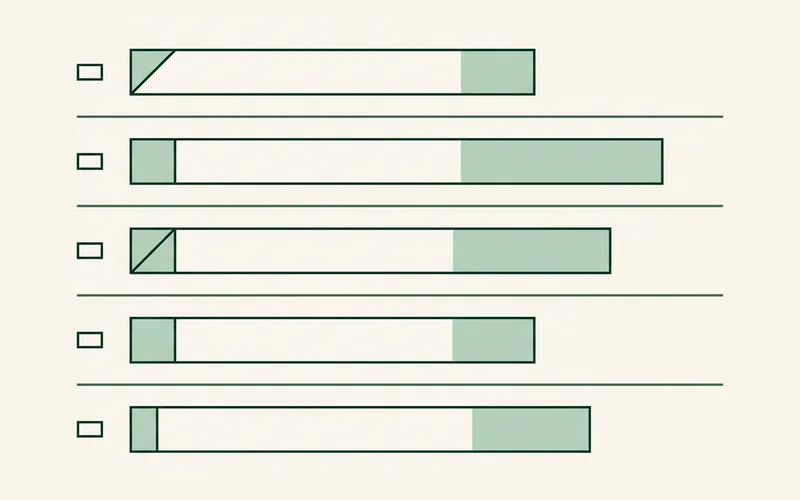
Several patterns reduce weight.
Bursts. A business with a steady trickle of reviews for two years that suddenly gains thirty in a fortnight, with no matching change in the business, has a timing pattern that does not look like normal customer behaviour. The burst is weighted down.
Uniformity. Reviews that share phrasing, structure, or vocabulary across supposedly unrelated customers. Genuine reviews are messy: people complain about parking, mention their neighbour, misspell things. A run of clean, on-message, similar-length five-star reviews is a signal in itself.
Thin content. A five-star rating with no text, or three words of text, carries less weight than a review describing what was done and how it went. This is not only an anti-manipulation measure; a detailed review is simply better evidence.
Reviewer history. Accounts with no other activity, or accounts that have reviewed an implausible number of businesses in the same trade in a short window, count for less.
Incentive language. Reviews mentioning a discount, a gift, or a request in exchange for the review. An incentivised review is not necessarily dishonest, but the customer was not selecting freely, so it is weaker evidence.
Timing against the job. In trades like the ones covered by the Singapore Locksmith Guide, where work happens at odd hours, a cluster of reviews written at implausible intervals after supposed jobs is worth noticing.
Distribution weighting also helps here, since a manipulated profile tends to be suspiciously flat: real businesses accumulate a scatter of threes and fours, and profiles that never do stand out.
What we cannot do
We will not claim detection we do not have.
A well-constructed fake, written by an established account with genuine history elsewhere, in natural language, spaced sensibly over months, is not distinguishable from a real review using public data. Anybody claiming they catch all of these is either using platform-internal signals they do not have access to either, or overselling.
Suppression is harder still. A business that quietly asks unhappy customers to come to them directly, and happy ones to post publicly, produces a review profile that is entirely genuine and systematically misleading. Nothing in a review corpus reveals that.
This is one of several reasons a score is evidence rather than proof, which we set out at length in what our scores do and do not measure.
Why weighting beats deleting
An obvious question is why we down-weight rather than exclude. Two reasons, and both are about being wrong.
Every signal above is probabilistic. A burst of reviews can mean a co-ordinated campaign, or it can mean a company had a busy month after a local incident and asked customers to say so. Uniform phrasing can mean a template, or it can mean a business that prints a review request card with a suggested prompt. Treating a signal as proof and deleting the reviews would punish plenty of businesses doing nothing wrong.
Weighting fails more gracefully. If we are right, the manipulated reviews contribute little and the score barely moves. If we are wrong, an honest business loses some of the benefit of a genuine cluster rather than having it erased. Given that a score is evidence rather than a verdict, the conservative error is the correct one.
It also keeps the method describable. “These patterns count for less” is something you can read, disagree with, and check against a profile. “We removed some reviews for reasons we will not specify” is not.
If you think a competitor is gaming reviews
Two steps, in this order.
Report it where the reviews are. The platform hosting the reviews is the only party that can remove them or act against the accounts. That is the step with actual consequences.
Then tell us, through corrections and removals. Include the business name, the directory, and what you have noticed. We can look at whether the pattern shows up in our weighting, and we would rather hear about it than not.
What we will not do is downgrade a competitor on request. A dispute process that let businesses damage each other by complaining would be gamed faster than the reviews are.
Questions we are asked about this
Can you catch every fake review?
A competitor is gaming reviews. What should I do?
Do incentivised reviews count?
Related guides
How to read a listing
A walkthrough of a directory listing: what each field means, what the score is built from, and what re-checked means.
ReadHow we check a business is real
The validity checks a listing passes before it appears, and what gets rejected.
ReadWhat our scores do and do not measure
The honest limits of a review-based score: what it captures, what it cannot, and why a high score is evidence rather than a guarantee.
ReadThe directories this method runs on
Everything on this page describes how the directories we publish are built. You can see what each one covers, what stage it is at, and where it lives.